
We’ve all been there: you book a 90-minute deep tissue massage to finally get rid of that “rock” in your shoulder. It feels great while you’re on the table, but the tension returns with a vengeance. If you are constantly searching for a way to fix stubborn muscle knots, you aren’t “broken.” The reality is that you are likely dealing with a neurological loop rather than a simple muscle knot. To get lasting nerve pain relief, we have to look past the muscle and focus on the “manager” of that muscle: The Nervous System.
The Difference Between Mechanical and Neurological Tension
Most traditional bodywork treats the body as a series of mechanical parts. This works for simple fatigue, but it fails for persistent, long-term discomfort and stubborn muscle knots that refuse to let go.
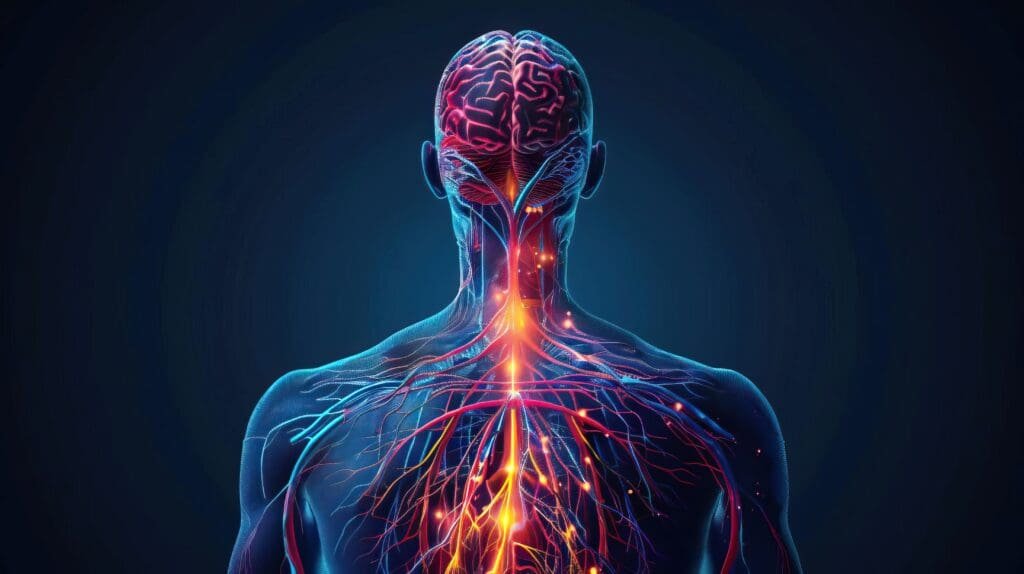
Think of your body like a high-end computer. The muscles are the hardware, but the nervous system is the software. Neurological tension is like a software glitch that keeps sending the command to “stay tight” over and over again. Until you “reboot” the software, you will struggle to find true nerve pain relief, and the hardware will continue to malfunction.

Why Your Body “Protects” Tightness
When you have an old injury or a surgical scar, your brain enters a protective state called Sympathetic Dominance. In this state, the brain sends a constant stream of electrical signals to your muscles to keep them “guarded.” This is why some stubborn muscle knots feel “hard as a rock”—your brain is literally bracing for impact 24/7. Because this is an electrical signal from the brain, traditional massage often fails to provide the nerve pain relief you’re looking for.
Enter MPS Therapy: The “Reset Button”
This is why I integrate MPS (Microcurrent Point Stimulation) Therapy into my sessions at Bodywork by Claudia Osman. MPS is designed specifically to provide nerve pain relief by combining acupuncture points with modern neurological science.
Unlike a TENS unit, MPS uses a specific DC microcurrent that mimics the body’s own natural healing frequency. It works by:
Down-Regulating the Nervous System: It tells the brain the “emergency” is over, allowing stubborn muscle knots to finally release.
Releasing Endorphins: It triggers the body’s natural painkillers, providing immediate nerve pain relief without aggressive pressure.
Softening Scar Tissue: Old scars act like “electrical kinks.” MPS clears these blockages, restoring flow and stopping the cycle of stubborn muscle knots.

What to Expect: A Different Kind of Relief
By using gentle points to communicate with your nerves, we can often achieve a deeper release in 10 minutes than 60 minutes of heavy pressure could provide for stubborn muscle knots. When the “software glitch” is fixed, the “hardware” (your muscles) can finally relax. Clients seeking nerve pain relief often report not just less tension, but better sleep, improved digestion, and a sense of “lightness.”
Is This the Missing Link for You?
If you are tired of “managing” your discomfort and are ready to resolve your stubborn muscle knots, it’s time to move beyond the surface. By addressing the neurological signals, we can help you achieve genuine nerve pain relief and reclaim a life of ease.
Frequently Asked Questions
Why does my neck tension keep coming back after a massage?
This is usually due to neurological guarding. Your brain perceives an old injury or stress as a threat and keeps the muscle “braced.” To fix it, you need a modality like MPS Therapy that resets the nervous system signal rather than just rubbing the muscle.
What is the best treatment for stubborn muscle knots?
For knots that don’t respond to pressure, Microcurrent Point Stimulation (MPS) is highly effective. It uses electrical impulses to “reboot” the nerve-to-muscle connection, allowing the tissue to soften without the soreness of aggressive deep tissue work.
Can old surgery scars cause back pain?
Yes. Scars create “fascial pull” and can disrupt the body’s electrical flow. Scar tissue release using MPS therapy can often resolve unexplained aches in other parts of the body by restoring proper neurological communication.