

The Universal “Knot”
If you’ve ever had a massage or a bodywork session, chances are you’ve pointed to a specific spot and said, “It feels like a tight muscle right there; like a knot.”
That stubborn, painful lump that just won’t seem to go away is one of the most common complaints we hear at Bodywork by Claudia Osman. But what if we told you that what you feel isn’t just a simple knot tied in your muscle fiber?
The science behind this palpable pain point is far more complex, involving two key players: Trigger Points and the often-overlooked connective tissue known as Fascia. Understanding this distinction is the first step toward lasting chronic pain relief and better movement.
In this deep dive, we’ll move beyond the knot to explore what is truly happening in your body and how targeted bodywork can address the root cause, not just the symptom.
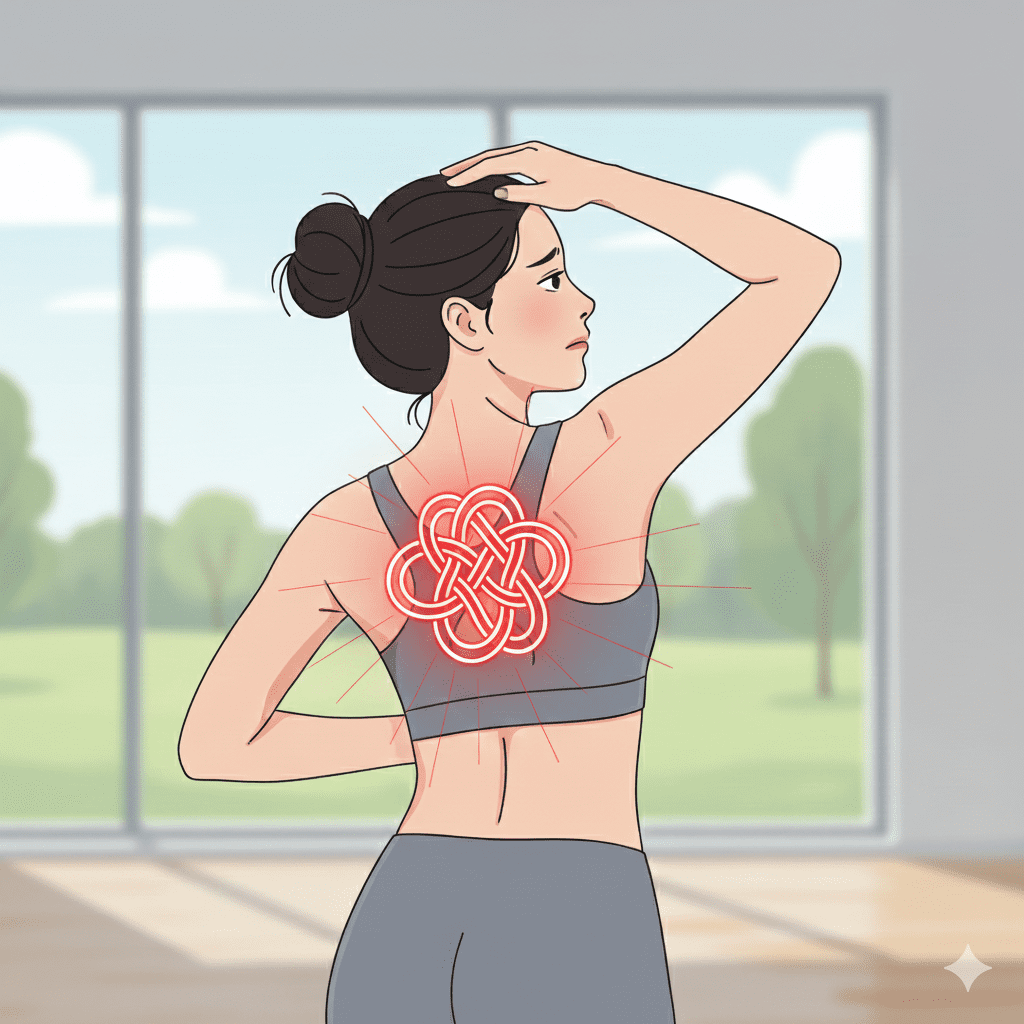
Decoding the Knot; It’s a Trigger Point
What most people refer to as a muscle knot is technically a Myofascial Trigger Point.
What is a Trigger Point?
A trigger point is a hyper-irritable spot located within a taut band of skeletal muscle. Think of it as a microscopic spasm where muscle fibers have contracted and locked up, cutting off their own blood supply. This causes two major issues:
Ischemia: The locked fibers lack oxygen and nutrients.
Waste Buildup: Metabolic waste (lactic acid, etc.) accumulates because the circulatory system can’t flush it out effectively.
This cycle of low oxygen and high waste makes the area extremely sensitive and painful.
| Type of Trigger Point | Description | Key Feature |
| Active Trigger Point | Causes pain without being touched. Often responsible for the throbbing pain and stiffness that limits range of motion. | Causes spontaneous, recognizable pain. |
| Latent Trigger Point | Painful only when compressed, but can cause muscle weakness and restricted movement. | Can turn Active with stress, injury, or poor posture. |
The Mystery of Referred Pain
One of the most fascinating aspects of trigger points is their ability to cause referred pain.
Example: A trigger point in the infraspinatus muscle (in your back, near the shoulder blade) often causes pain that shoots down the front of your arm. Similarly, a tight muscle in your hip might be the real culprit behind your knee discomfort.
This is why simply rubbing the sore spot rarely works; the true source of the pain may be elsewhere, requiring a holistic assessment of your entire structure.
The Mystery of Referred Pain
One of the most fascinating aspects of trigger points is their ability to cause referred pain.
Example: A trigger point in the infraspinatus muscle (in your back, near the shoulder blade) often causes pain that shoots down the front of your arm. Similarly, a tight muscle in your hip might be the real culprit behind your knee discomfort.
This is why simply rubbing the sore spot rarely works; the true source of the pain may be elsewhere, requiring a holistic assessment of your entire structure.
The Missing Link; Understanding Fascia
While trigger points deal with the muscle fiber itself, the key to truly understanding chronic pain and stiffness lies in the tissue that surrounds and connects everything, Fascia.
What is Fascia? The Body’s Web
Imagine a three-dimensional spiderweb that runs head-to-toe, finger-to-finger. That’s fascia.
It is a dense, tough connective tissue that wraps every muscle, organ, bone, nerve, and blood vessel.
It provides structure, support, and protection.
It is largely made of collagen, which gives it incredible strength and flexibility.

The Problem: Fascial Restriction
Unlike muscle tissue, fascia can’t be stretched like a rubber band. When subjected to physical or emotional stress, injury, or repetitive poor posture, the fascia can dehydrate and harden, becoming sticky and restricted.
This hardening is called Myofascial Restriction.
A restriction in one area can pull and strain tissues miles away. Because fascia is continuous, a tight spot in your calf can literally contribute to tension in your neck. This explains why tight muscles often feel interconnected and why a targeted, localized approach to pain often fails.
At Bodywork by Claudia Osman, our approach goes beyond the knot to treat the underlying fascial restrictions and the active trigger points they create.
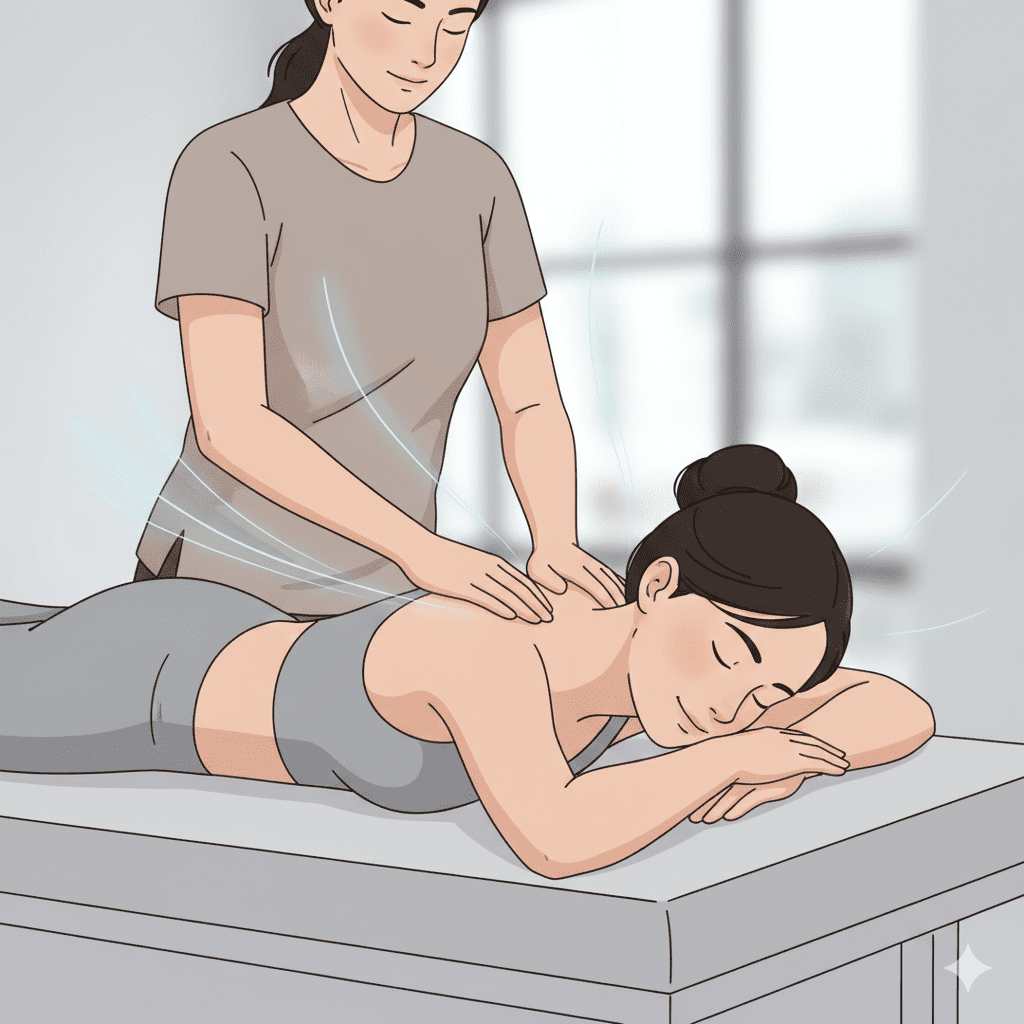
Targeted Bodywork: Myofascial Release
This is a key component of effective, lasting bodywork. Myofascial Release (MFR) is a specialized technique that involves applying gentle, sustained pressure into the fascial restrictions.
Sustained Pressure is Key: Unlike traditional massage, MFR requires holding pressure for several minutes (often 3-5 minutes or more). This slow, patient approach allows the dense, tough fascia to actually begin to elongate and release.
Rehydrating the Tissue: As the tissue releases, it allows fluid to flow back into the area, improving circulation and helping to flush out the metabolic waste from the trigger points.
Restoring Length: By releasing the shortened, hardened fascia, we can restore the natural length of the muscle, leading to long-term tight muscles relief and full range of motion.
Why Self-Massage and Stretching Often Fail
While self-care is vital, most foam rolling or stretching only addresses the elastic part of the muscle (the fibers). It rarely provides the deep, sustained pressure needed to release the tougher, more plastic fascia. That’s where professional bodywork becomes essential.
5 Signs Your “Knot” is Actually a Fascial Restriction
How do you know if your pain requires deep structural work? Look for these signs:
The Pain Moves: The location of your ache shifts throughout the day or week (referred pain).
Stretching Doesn’t Work: You stretch the area religiously, but the tight muscles return almost immediately.
Localized Pain Relief is Temporary: A deep tissue massage provides momentary relief, but the knot quickly returns.
Poor Posture is Permanent: You feel like you can’t stand up straight, or one shoulder always feels lower than the other.
Stiffness After Rest: You feel extremely stiff after sitting for long periods, or in the morning, beyond what a simple stretch can fix.
If you recognize these signs, it’s time to consider an approach that targets the fascial system.
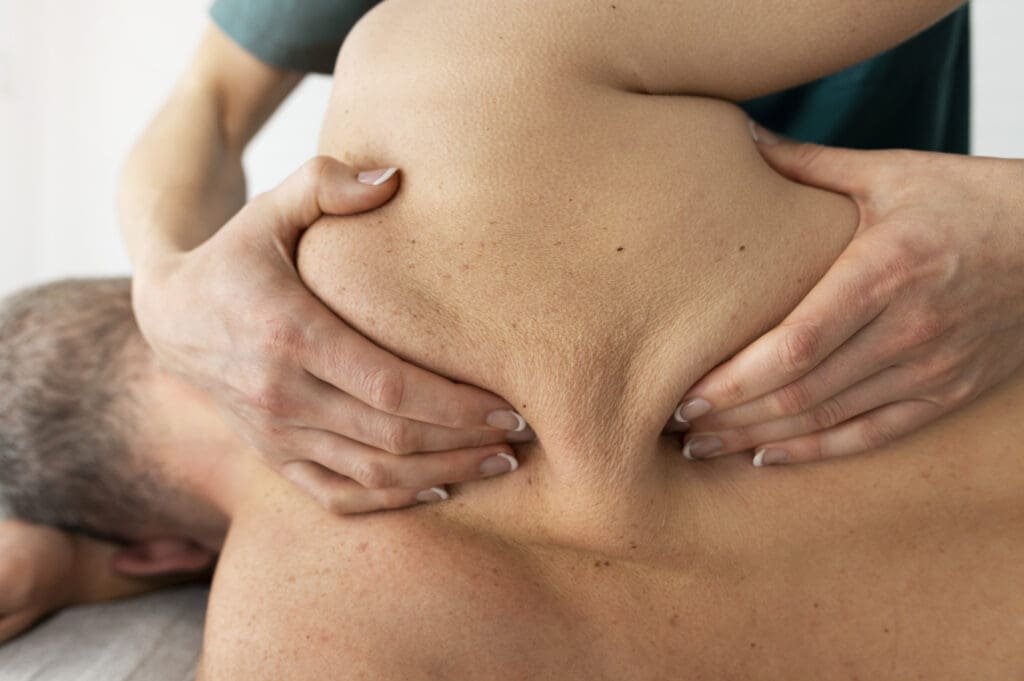
Healing Starts with Understanding
Moving beyond the knot is about changing your perception of pain. Your stiffness is rarely just a temporary localized problem; it is often a sign of underlying systemic tension and fascial restrictions built up over time from stress, injury, or posture.
By focusing on the incredible, interconnected web of fascia and addressing those stubborn trigger points through specialized techniques like myofascial release, we can help you achieve truly lasting chronic pain relief and move with greater freedom.